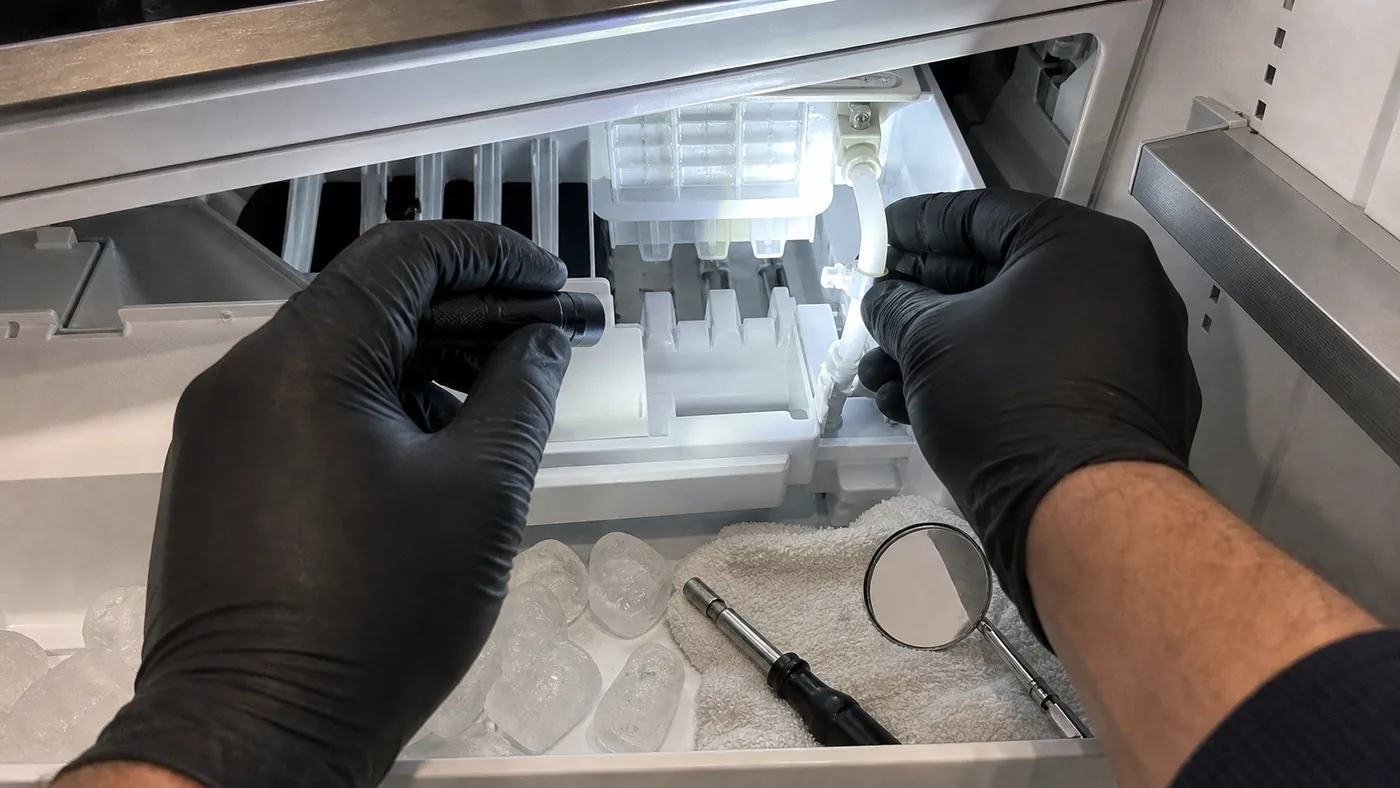
A Sub-Zero that pools water under the door or drips inside almost always traces to one of four things: a frozen defrost drain, a cracked or kinked supply line, an overflowing condensate pan, or a split ice-maker fill tube. We diagnose drain-first, find the source, and stop it before it reaches your floor.
A Sub-Zero rarely leaks for a mysterious reason. The water is coming from one of a handful of places, and the trick is reading where it shows up rather than guessing at a part. That matters more in Sonoma than in a lot of towns, because of what sits under these refrigerators.
Around the plaza and along Spain Street, the kitchens we work in are often carved into century-old adobes and Westside Victorians with original wood and tile underfoot. A slow seep under a built-in does not stay a small problem there — it cups boards, lifts grout, and works into plaster you cannot easily replace. And in the valley's many second homes and vacation rentals, from El Verano up toward Glen Ellen and Kenwood, a drip can run for weeks between owner visits with no one to catch it. So we triage the drain and the pan first, stop the source on the same call, and leave a photographed report a caretaker can act on.
We are an independent repair company, not affiliated with, authorized by, or endorsed by Sub-Zero Group, Inc.
Where the water actually comes from
The four leaks we open up most
A frozen defrost drain (the puddle inside)
If the water shows up inside the cabinet — a pool on the floor of the fresh-food section, often under the crisper drawers — the defrost drain trough at the back of the freezer floor has iced over. Meltwater that should run down to the pan backs up, finds the lowest seam, and creeps forward. It is the single most common leak we open up in valley-floor kitchens, and it is a clearing-and-warming job, not a reason to condemn the unit.
A cracked or kinked supply line
The poly or copper line that feeds the dispenser and ice maker runs behind the cabinet to a shut-off, often a saddle valve under the sink or down in a Westside basement. A pinhole at a compression fitting, or a kink from the day someone pushed a 48-inch built-in back flush to the wall, weeps slowly. Behind cabinetry that drip can track along the subfloor for a long time before it ever reaches daylight.
An overflowing condensate pan
Every built-in has a shallow pan under the lower grille where drain water is meant to evaporate off the warm compressor. When the condenser is matted with the fine vineyard and pollen dust that settles over the valley each summer, the compartment runs hotter and wetter, the pan fills faster than it can evaporate, and it spills onto the floor at the front grille — a clean-water leak with no plumbing fault at all.
A split or misaligned ice-maker fill tube
The small tube that delivers a measured shot of water to the ice mold can shift out of line or split where it has frozen and thawed a hundred times. Instead of landing in the mold the water dribbles down the back of the bin and out the door seal. The clue is a leak that only appears a while after each harvest cycle, paired with malformed or hollow cubes.
A spill is not a leak — tell them apart first
Before you assume the worst, rule out the harmless version. Condensation beading on the outside of a wine-column door on a humid evening, a glass knocked over inside, or a quick puddle after the door was left ajar in a warm August kitchen are not plumbing faults — they dry up and do not return. A real leak comes back on its own schedule: every defrost cycle, every ice harvest, or steadily whenever the unit runs. If wiping it up buys you only a few hours, you have a true source to find, and the steps below narrow it down fast.
Before you call
How to find where your Sub-Zero is leaking
Note exactly where the water sits
Inside on the fresh-food floor points to the defrost drain; a puddle on the kitchen floor under the door points to the pan or the ice-maker tube; water behind or beside the unit points to the supply line. Where it pools is the fastest clue to which of the four faults you have.
Pull the lower grille and check the pan
With the grille off, look at the condensate pan under the compartment. A full or overflowing pan, and a condenser coil furred with grey valley dust, means the leak is evaporation that cannot keep up — not plumbing.
Look for an ice sheet on the freezer floor
Empty the bottom of the freezer and feel the floor at the back. A pane of ice over the drain hole confirms a frozen defrost drain backing water into the cabinet above.
Trace the water line and shut-off for moisture
Follow the supply line to its saddle valve and run a dry paper towel along the fittings. Any damp, mineral crust, or a green weep on copper marks a slow line leak feeding the floor behind the unit.
Photograph the source and the model tag
Snap the wet spot, the pan, and the model-and-serial tag inside the door. For an absentee owner or a caretaker that photo set lets us confirm parts before the visit and approve the repair remotely.
What it costs and what happens next
Most leaks land in the bounded range, not the expensive one. A drain clear, a fill-tube swap, or a new inlet valve is well-stocked and quick; a cracked condensate pan or a fresh run of supply line is a little more involved but still routine. You can see the planning ranges on the Sonoma diagnostic fees and pricing page before anything is booked.
If the leak comes with warm temperatures, the drain backup may be the visible end of a defrost or airflow problem — start with the not-cooling diagnostic. If it is tied to the dispenser or a stalled ice maker, the supply side is covered on the ice maker and water line page. Either way, the $89 service call goes toward the repair, and you approve the work after you see the source.
FAQ
Sub-Zero water-leak questions
Why is water pooling on my kitchen floor under the Sub-Zero?
Floor water at the front almost always means the condensate pan is overflowing or the ice-maker fill tube is dripping; water that appears inside the cabinet first means the defrost drain is frozen. Pull the lower grille and check whether the pan is full and the coil is dust-packed before assuming a plumbing failure.
Will a slow leak really hurt the floor in an older Sonoma home?
Yes. Many Eastside Historic Plaza District adobes and Westside Victorians still have their original wood and tile floors, and water wicking under a built-in for days can cup boards, lift tile, and stain plaster long before it is noticed. That is why we triage the drain and pan first and stop the source the same visit.
I only visit my Sonoma place on weekends — could a leak run unseen?
It can run for weeks. In the valley's many second and vacation homes a fill-tube drip or a weeping saddle valve has no one to catch it between visits. We leave a written, photographed report a caretaker or property manager can act on, and we will talk through a simple shut-off-when-away routine.
Do you fix the drain or replace the whole refrigerator?
Almost always fix. A frozen drain, a tired fill valve, a cracked pan, or a split fill tube are bounded, well-stocked repairs on a unit built to run fifteen to twenty years. We show you the readings and the source before any work, and the diagnostic fee goes toward the repair.
Stop it at the source
Book a Sub-Zero leak diagnosis in Sonoma
Tell us where the water sits and have the model tag handy; you will get a clear price before any work begins.